Why Standing Alone Isn't Enough: The Truth About Standing Desks

💡 Key Takeaways
Standing all day creates its own set of health problems, from varicose veins to joint pain
Movement variety matters far more than whether you sit or stand
The ideal ratio is roughly 20 minutes sitting, 8 minutes standing, and 2 minutes moving every half hour
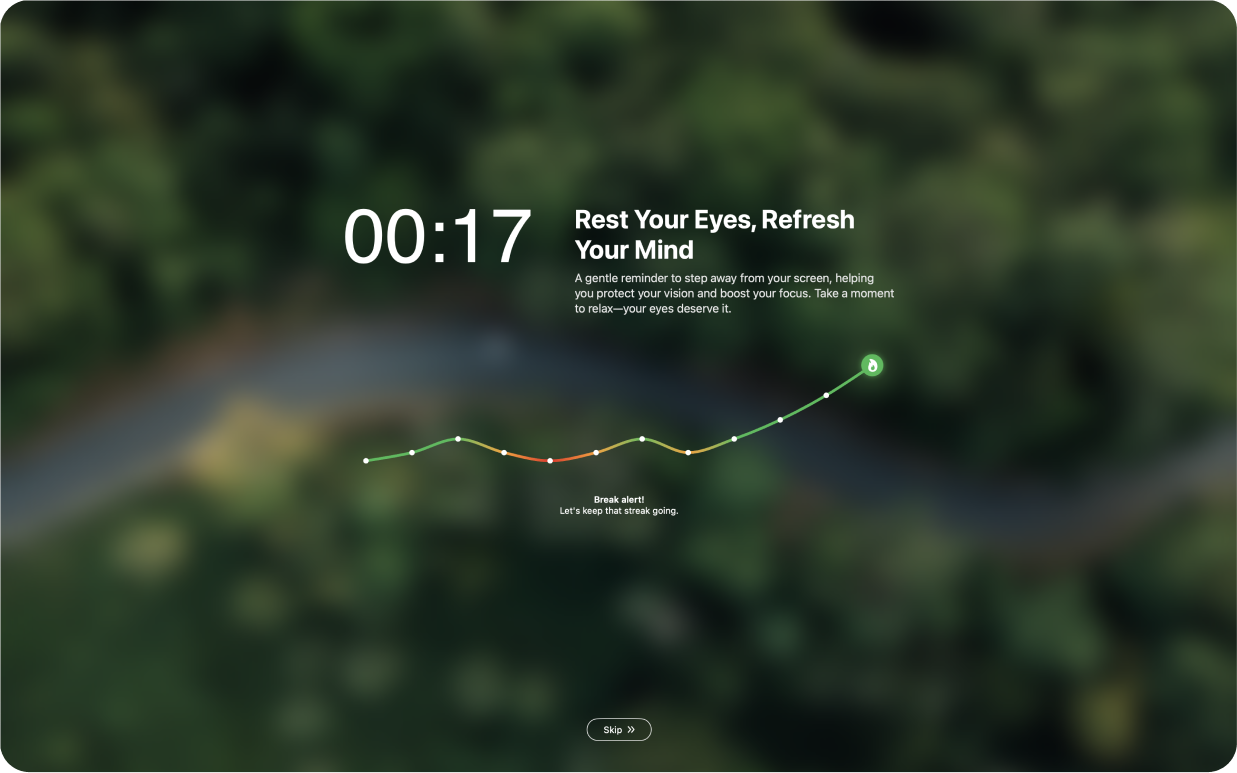
Regular break reminders help you build the habit of alternating positions throughout the day
You finally did it. You invested in a standing desk, set it up, and told yourself this was the moment everything would change. No more slouching. No more stiffness after lunch. You were going to stand your way to better health.
Fast forward a few weeks. Your lower back aches. Your feet are sore. Your knees feel like they belong to someone twice your age. And that burst of energy you expected? Replaced by a dull fatigue that hits around 2 PM like clockwork.
You're not doing anything wrong. The problem is what you were told about standing desks in the first place.
The Standing Desk Promise vs. Reality
Standing desks exploded in popularity on the back of one catchy phrase: "Sitting is the new smoking." The logic seemed simple. If sitting is bad, then standing must be good. Offices around the world invested thousands in adjustable desks, and employees dutifully raised their monitors to eye level.
But here's the thing nobody mentioned: standing still is not much better than sitting still. The real villain was never the chair. It was the stillness.
What Prolonged Standing Actually Does to Your Body
When you stand without moving for extended periods, your body pays the price in ways you might not expect.
Your legs and feet take the first hit:
- Varicose veins Blood pools in your lower legs when you stand still, stretching vein walls and weakening the valves that keep blood flowing upward. Over months, this leads to visible, sometimes painful varicose veins.
- Joint compression Your knees, hips, and ankles absorb your full body weight continuously. Without the relief that sitting or walking provides, cartilage gets compressed without a chance to recover.
- Plantar fasciitis The connective tissue along the bottom of your feet becomes inflamed from constant pressure. What starts as mild soreness can turn into sharp, stabbing pain with every step.
But it doesn't stop at your legs:
- Lower back strain Standing causes your pelvis to tilt forward slightly, increasing the curve in your lower spine. Over hours, this compresses the lumbar discs just as much as poor sitting posture does.
- Mental fatigue Your body spends energy just keeping you upright. That constant low level effort drains cognitive resources you could be using for actual work.
- Reduced focus Physical discomfort is distracting. When your feet hurt and your back aches, deep concentration becomes significantly harder.
The Real Answer: Movement, Not Position
Here's what the research consistently shows: the best position is always the next one. Your body wasn't designed to hold any single posture for hours on end. It was designed to move.
A widely cited study from Cornell University's ergonomics department recommends what they call the 20:8:2 rule. For every 30 minutes of work, spend roughly 20 minutes sitting, 8 minutes standing, and 2 minutes moving around. That movement can be as simple as walking to the kitchen, stretching at your desk, or doing a quick lap around the room.
The magic isn't in the exact ratio. It's in the variety. Your muscles, joints, and circulatory system all benefit from regular changes in position. Sitting for a while lets your legs recover. Standing for a bit engages your core and shifts the load. Moving gets your blood flowing and resets your focus.
Why Your Standing Desk Is Still Worth It
None of this means your standing desk was a bad purchase. Quite the opposite. An adjustable desk gives you the freedom to switch positions throughout the day, which is exactly what you need. The problem was never the desk. It was the assumption that you should stand all day instead of sit all day.
Think of your standing desk as one tool in your movement toolkit. It's the alternating between positions that delivers the health benefits, not any single position on its own.
How to Build a Movement Habit That Sticks
Knowing you should move more is one thing. Actually doing it while you're deep in a project, on a call, or racing toward a deadline is another. That's where most people fail. Not because they lack willpower, but because their environment doesn't support the habit.
Here's what actually works:
- Set position change reminders You won't remember to switch from sitting to standing (or vice versa) when you're focused on work. A gentle reminder every 20 to 30 minutes is the simplest way to build the habit without relying on memory.
- Start with micro movements You don't need a full stretching routine. Shifting your weight, rolling your shoulders, or taking ten steps is enough to break the pattern of stillness. Small movements compound into big benefits over time.
- Match your position to your task Standing works well for quick tasks, calls, and brainstorming. Sitting is better for deep focus work that requires sustained concentration. Use the nature of your work to guide your transitions.
- Listen to discomfort early Pain is your body's signal that it needs a change. Don't push through sore feet or an aching back. Switch positions the moment you notice tension building, not after it becomes unbearable.
The Standing Desk Isn't the Hero. You Are.
The fitness industry loves to sell solutions in the form of products. A new chair. A standing desk. An ergonomic keyboard. And while these tools can absolutely help, none of them replace the one thing your body actually needs: regular movement.
You don't need to overhaul your entire workspace. You don't need to follow a rigid schedule. You just need to stop treating any single position as the answer and start treating movement as a natural part of your workday.
Your standing desk gave you options. Now use them. Sit when you need to focus. Stand when you need energy. Move when your body asks for it. And if you need a nudge to remember, that's exactly what smart break reminders are for.
Elevate Your Workday with DeskRest
Experience a transformative approach to your daily work routine. DeskRest seamlessly integrates into your workflow, offering intelligent break reminders, posture alerts, and focus-enhancing tools. Boost your productivity, protect your well-being, and enjoy a more balanced work life.